Showing posts with label smart machines. Show all posts

Monday, October 26, 2015

Gartner Identifies Autonomous Agents as Top Technology Trend to Watch for in 2016

Can you believe it is almost the end of the year? With the holidays fast approaching, the rest of 2015 is going to fly by. In fact, leading analysts have already started making predictions for 2016 top trends. Recently, Gartner went into detail about top technology trends at the Gartner Symposium/ITxpo 2015 in Orlando. Check out what tech trends they think you should look out for in 2016 on the infographic below: 

Infographic with a pyramid of circles with graphics inside them to depict the top technology trends of 2016
Gartner, Smarter with Gartner, Top 10 Technology Trends Signal the Digital Mesh, October 7, 2015
We are excited (but not surprised) to see 'autonomous agents and things' as a top trend in the coming year according to Gartner. Virtual Personal Assistants (and Virtual Customer Assistants) have made major strides within the past couple years, and more companies are beginning to see the benefits of investing into this technology. Not just any static Artificial Intelligence (AI) will cut it though; consumers are demanding sophisticated, intelligent agents that can handle tasks seamlessly. "Over the next five years we will evolve to a postapp world with intelligent agents delivering dynamic and contextual actions and interfaces," said Mr. Cearley. "IT leaders should explore how they can use autonomous things and agents to augment human activity and free people for work that only people can do. However, they must recognize that smart agents and things are a long-term phenomenon that will continually evolve and expand their uses for the next 20 years." (Gartner Identifies the Top 10 Strategic Technology Trends for 2016)

What is your opinion on autonomous agents and things? Thoughts about any of the other predicted trends for 2016? Let us know in the comments below. 
For more information on next generation Virtual Assistant technology for Enterprise and SMB, please contact noHold. 
www.nohold.com

Thursday, September 11, 2014

Throwback Thursday: From the First Internet Search Engine to Predictive Search

Photo Credit: psdgraphics.com
Approximately 24 years ago, the first Internet search engine was launched, they called it Archie. "It was used to index FTP archives to make finding files easier. How, as the technology for the World Wide Web was not invented until later in the year, it was not the first web search engine." (thisdayintechhistory.com)

Innovations to search engines took off after that. Ever since then, there has been ever-changing improvements to search engine tools. Engineers are continuously trying to come up with ways to make searching easier, and in a span of about a quarter of a century, search has innovated a lot.

In today's World, we use search for almost everything. The most common answer to a question we don't know is, "Google it." It has become so easy to search for information on the Internet with the use of complex algorithms that analyze text (and voice in some cases) to provide you with the right content.  

Going forward, predictive search is a hot topic in the tech community. Google started using predictive search algorithms a while back (remember when finishing your sentence in the search bar was a new phenomenon), but now predictive search is getting more intuitive. Not only can it make an educated suggestion as to finishing your sentence, it can suggest answers to questions you didn't even know you wanted to know based on prior interactions. 

As we can see, search is beginning to move toward a more intuitive and interactive based logic to find what you need. It is becoming more like a personal assistant that can communicate with you, rather than a simple list of archived files. What do you think about the future of search? With smart machines and the Internet of Everything, how do you think search will adapt to simplify the lives of the billions of connected users?
www.nohold.com


Monday, May 5, 2014

The Future of Wearable Technology…for Kids!


Kids in the 21st century are getting accustomed to technology at much younger ages. "Around one quarter of children aged 12– 15 (26%) and 18% aged 8-11 have their own tablet computer, while household ownership of a tablet has more than doubled since 2012 (51% vs. 20%). Use of a tablet computer at home has tripled among 5-15's since 2012 (42% vs.14%) while one-quarter (28%) of 3-4's use a tablet computer at home" (Digital Kids: how children are using devices, apps and media in 2013). With such compelling statistics about the use of technology among children, Leapfrog has decided to venture into the wearable technology market. They already create apps and tablets focusing on education, but the LeapBand is a similar concept to adult fitness bands (i.e. FitBit, Jawbone, Nike Fuel Band, etc.), encouraging play/ healthy living habits for children.

As mentioned in the video above, Trying Out Leapfrog LeapBand, a Fitness Band for Kids, the LeapBand is an interactive “fitness gadget” for children ages 4 to 7 with 50 games and challenges such as “walk like a crab” or “spin like a helicopter.” Once an activity is completed, new games and “virtual pets” are unlocked on the device. Another feature, designed for the parents, is the ability to monitor your child’s activities and control what challenges they can and cannot do.

Children are exposed to technology use all the time. In a technology driven era, children are sometimes expected to know how to use these devices. (Tablets in the classrooms, smartphones, etc.) Providing them with a popular technology that also promotes physical activity is a great way to support healthy lifestyles later on in their adult years, while learning the ins and outs of using different technologies.

Can the worries of parents about their children not getting enough exercise or outdoor activity due to technology now be put to rest? Do you think we should embrace the use of technology for our children?

www.nohold.com


Wednesday, April 9, 2014

Behind the Scenes: An Exclusive Preview of noHold's Virtual Butler

Augmenting the Internet of Everything     

     
     Lately, there has been a lot of talk in the news about the Internet of Everything (IoE). Just recently we announced the arrival of noHold Connect, the technology used to empower humans to experience the IoE from a single user interface. Diego Ventura, the CEO and founder of noHold, made a short video showing a raw, exclusive preview of the Virtual Butler for wearable devices.        


     According to a recent article published by Computerworld, “Analysts expect not only an explosion of wearable devices in the next three years, but an explosion of mobile apps of all kinds. Research firm Gartner last year predicted that wearable devices will drive half of all app interactions by 2017, a startling prediction, but one that Gartner believes was reinforced by the flurry of wearable devices shown at International CES.” One analyst mentioned that “virtually all vendors are choosing mobile apps to interact with the way we will use a wearable device.”(Computerworld.com)

     The scenario that noHold described in a Press Release about noHold Connect and the IoE, is coming to fruition. noHold connect augmenting the IoE is about focusing on bringing the human element to the future of interconnected living, while making consumers less dependent on multiple apps.     

     We are not stopping at wearable devices, though. Soon, multiple vendors from a variety of industries will connect to the Virtual Butler, encompassing all aspects of the IoE. These include companies in the telecommunications space, automobile industry, smart appliance manufacturers (i.e. coffee machines, refrigerators,etc.), and much, much more.

     As you can see from the preview above, the goal of the Virtual Butler is to simplify our lives. There are so many apps on our smartphones that control devices/services that are connected to the Internet. For example, mobile banking apps, apps that control your DVR, home security apps, etc. Having an individual app for each of these connected items can become a bit chaotic, but imagine a life with a Virtual Butler that can help you manage and get the most out of your devices, all through a single user interface (UI). It creates an enhanced interactive experience that users are demanding.      

     The best is yet to come for the Virtual Butler! For more information on the IoE and the Virtual Butler check out this slideshare presentation, Connecting the Internet of Everything to the Human Element

Monday, March 31, 2014

Barcelona Moves Forward With the Internet of Everything, Becoming One of the Top Smart Cities in the World

The Internet of Everything (IoE) movement is booming. More and more people are connecting devices to the Internet every day. In fact, Barcelona, Spain has already embraced the Internet of Everything ‘lifestyle.’ Check out an example below (by Cisco) to see how they've created a smart city, successfully.


"Worldwide Smart City spending on the Internet of Things will be $265 billion in 2014" (IDC). Soon, most major cities will become smart cities; making positive changes for the lives of many. The ability to stay connected is meant to make everyday activities less daunting. For example, in the video above, Barcelona eliminated a large chunk of street traffic by making it easier for people to find parking. In addition, the smart bus stop allow people to find route information and insight into the surrounding areas. They turned what was a long, unpleasant activity into an interactive experience with the city.

Integrating a Virtual Agent into the Internet of Everything sensation will only increase the satisfaction of future communities. Similar to Siri, whenever you have a command or question about your connected devices, a Virtual Agent will act as a 'butler' and will help manage all your connected devices via a single user interface. To find out more on how Virtual Agents will augment the Internet of Everything, click here.     

Monday, March 10, 2014

A Self-Driving, Personal Virtual Assistant


Smart car sales are continually increasing in popularity since their adoption in the US. Each year they seem to be getting a little more advanced. For example, Apple has created CarPlay, which they launched at the Geneva Motor Show. This software provides iOS users a hands-free option to make phone calls, check voice mail, etc. It is comparable to having a Personal Virtual Assistant programmed into your car.


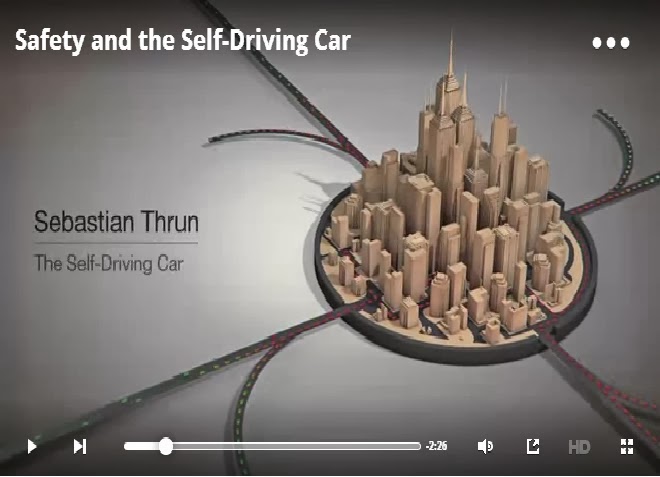
Similarly, Google is taking smart cars to the next level with their design of the self-driving car. If you live in the Silicon Valley, you have probably seen Google’s self-driving car in action. The video above is Google’s vision for the future of smart, self-driving cars. With the Internet of Everything (IoE) era among us, and the ability for devices to connect with each other, this vision of less congested, safer roads is not too far away. Automobile manufacturers are already incorporating smart machines in vehicles for things such as hands free GPS, and music. How will smart machines and Artificial Intelligence continue evolving along with self-driving cars?

Thursday, March 6, 2014

Throwback Thursday: Virtual Agents Replacing Old Habits

Mashable
Do you remember the time when letters were handwritten and sent via the postal service? What about when a disposable camera was necessary to capture those priceless moments on vacation? To the right is an infographic depicting 50 things society has replaced thanks to technological advances. Some examples from this infographic include making a phone call to find out accurate movie times, recording favorite shows using a VHS recorder, and one I am guilty of no longer taking part in, keeping printed bills and bank statements. Do any of these sound familiar to you?

Today, everyday tasks are made accessible electronically and/or via self-service. There is no need to call movie theaters to get show times. All we have to do is pull out our Smartphones and look it up online. Banking options are also available online now, such as paying bills, depositing checks, transferring money, and tracking bank statements. It seems like we have transitioned from an era of full-service to an era of self-service (the consumers preferred channel).

We have come a long way with technology, and as you can see have made great changes, but there is always new ways to do things lurking around every corner. With the invention of all these new smart machines, virtually everything can be connected to the Internet. There are Smartphones, smart cars, smart dishwashers, smart watches, and more. Virtual Agents are able to act as butlers to augment these devices and the Internet of Everything. We will soon be able to ask a single Virtual Agent to do multiple things that before, we would have had to do manually. For example, changing the temperature in your home can be accomplished through inquiring a Virtual Agent on your Smartphone. Similarly, you can set your DVR to record your favorite show through that same Virtual Agent. Using Virtual Agents as a butler will help simplify your life and make using your smart devices more convenient. And as you can tell from looking at how we've done things in the past and comparing them to how we do them today, technology is created to make daily tasks easier. The possibilities are endless. What do you think the future has in store for technology? What things do we do today that might change in the future?

Happy Throwback Thursday!

Wednesday, February 5, 2014

noHold Announces noHold Connect to Empower Humans to Experience the Internet of Everything (IoE) From a Single User Interface (UI)

February 5, 2014, Milpitas California – noHold Connect will empower humans to experience the Internet of Everything. With much hype around the creation of a standardized platform for devices to ‘communicate’, companies such as Qualcomm & Linux have created the AllSeen Alliance, while others such as Logitech aim to educate and drive awareness with the Internet of Things Consortium. The goal is to advance the Internet of Everything. While these organizations aim to standardize awareness as well as the technological aspect, noHold aims to create the experience.

Cisco defines the Internet of Everything (IoE) as bringing together people, process, data, and things to make networked connections more relevant and valuable than ever before-turning information into actions that create new capabilities, richer experiences, and unprecedented economic opportunity for businesses, individuals, and countries (Cisco.com, “Internet of Everything.”). Analyst firms and technology leaders agree that by 2020, over 30B devices will connect to the Internet. Although we are still in the preliminary stages of experiencing the IoE movement, history is being made with the standardized platforms.

Virtual Agents (also known as Virtual Assistants, Intelligent Virtual Agents, Chatbots, etc.) have been leveraged by trusted brands for years, saving millions of dollars and increasing revenue, while enhancing customer service and satisfaction. noHold Connect is the evolution of Confederated Knowledge™, which noHold announced in 2010. noHold Connect is the ability to:

1.   Allow multiple Virtual Agents to connect. For example, a consumer using Telecommunications services must deal with multiple vendors, not just the Telco itself. If Mary has an issue with her wireless device, she will likely have to contact the manufacturer, not her Telco. noHold Connect empowers Mary to start the conversation with her Telco provider, and ‘in place activate’ the Virtual Agent from her device manufacturer without changing websites, or starting her conversation from the beginning.

2.   Leverage a ‘butler’ style Virtual Agent to experience the Internet of Everything. Similar to the above scenario, Mary can interact with one Virtual Agent from her device to ‘talk’ to other Virtual Agents and accomplish specific tasks. Personal Virtual Assistants such as Siri® and Google Now™ are examples of personal digital assistants that leverage apps. For example: If an end user wants to reset his/her NEST thermostat, he will leverage one mobile application. A consumer interested in recording a program on his DVR will require yet another application. Virtual Agents, like noHold, can be leveraged as a virtual butler to ‘connect’ with other virtual agents and help humans experience the Internet of Everything from one single User Interface (UI). The difference is noHold Connect changes the experience and puts simplicity and interactivity back in the hands of the user.

For a visual example of how Virtual Agents enhance the Internet of Everything, please visit: Virtual Agents and The Internet of Everything 


With customers in pertinent industries such as Telecommunications, Consumer Electronics, PC and Devices, Security Software, Networking, and more, noHold Connect is the future of Smarter Self-Service™ and Consumer Interaction.

“I have 48 applications loaded on my iPhone. I had to learn a different paradigm to operate each. What drove us to create noHold Connect was the idea that it is time for machines to adjust to our way of living, rather than the other way around. We are embarking on a journey that will change the way we interact with everything. Having the smart technology to empower your customers today, is table stakes for a competitive customer experience, ” 
Diego Ventura, CEO of noHold.

About noHold Inc.
noHold is a privately held company established in 1999 and is headquartered in Milpitas, CA, USA (Silicon Valley). noHold is the acknowledged leader in Web based Self-service solutions with a mission to deliver real answers to real questions - real fast. Simple to use, easy to implement and as close to human as you can get, noHold turns automated customer support into cognitive customer interaction. noHold customers include Toshiba, Lenovo, Cisco and a host of industry leaders. More information can be found at www.nohold.com.


Press Contact 
Sarah Ramoz 
Marketing Operations Manager
sramoz@nohold.com 
408.946.9200 ext. 305

Copyright © 2014 noHold Inc. All other product and service names are the property of their respective owners.


Wednesday, January 29, 2014

Gartner Predicts, "By 2016, 35% of IT Operations Organizations Will Have 75% of IT Service Desk Contacts From the Business Resolved by Virtual Assistants"

Hi all, I wanted to share with you a blog we posted for Albert written for IT professionals/CIO's, but it also gives great information for Virtual Agent enthusiasts as well. Enjoy!


     This year I have been talking a lot about the growing popularity of smart machines, the Internet of Everything (IoE), and Virtual Agents. I typically write about these topics from a customer support or customer service perspective in the PC market, though. I recently came across a document from Gartner explaining that similar trends hold true for the IT Service and Support Management (ITSSM) industry. Gartner predicts, “By 2016, 35% of IT operationsorganizations will have 75% of IT service desk contacts from the businessresolved by virtual assistants” (Predicts 2014: Automation Brings Promise to IT Operations Management, But at What Cost? December 2013). With BYOD, WYOD, bid data, and more, IT organizations are in need of extra hands to eliminate some of the work load. Using Virtual Agents to answer tier one questions open up a huge amount of time for IT professionals to focus on other important aspects of the business, all while reducing the cost within the IT department. In a population that demands technology, self-service is the norm to most people and is quickly becoming the preferred channel for support. Employees want to find the answers to their own questions fast and avoid long resolution times. Providing them with Virtual Agents, allows them the capability to help themselves.

     As I mentioned, artificial intelligence is one of the few, big disruptive technologies emerging into the tech world in 2014. More and more big name companies are recognizing its popularity and becoming more proactive in their journey towards automation and Artificial Intelligence. Just recently, IBM invested over one billion dollars into developing a new business unit for Watson (IBM’s Watson for Business: The $1 Billion Dollar Sire Slayer). The market is getting dominated by smart machines fast and experts agree that there will be a strong demand for artificial intelligence in the coming future. It is beneficial to stay ahead of the curve and be prepared for the undergoing changes. Gartner recommends, “Act now to initiate exploration, build expertise, assign resources, and launch smart machine initiatives. This area is in the early state of evolution, but holds enough promise that early adopters should benefit more over time” (IBM Bets on New Watson Unit to Ignite Smart Machine Era Growth, January 2014).

www.nohold.com

Thursday, January 16, 2014

Throwback Thursday: Then and Now: The Consumer Electronics Show

The Consumer Electronics Show (CES) has been around since 1967. It is a time of the year where companies can show off what new innovations they have created and contributed to the market. Since the CES 2014 has officially come to an end as of January 9th, I thought it would be fun to take a look back at previous CES’s for this week’s Throwback Thursday.

I wanted to find some past Apple announcements from CES (maybe of the iPhone), but then I realized they have not attended a CES since 1992. In 1992, they announced the launch of Apple’s Newton; one of their first designs of a handheld computer (i.e. a tablet). Since then, Apple has not returned to any CES but instead has created their own conferences to announce new Apple products. A decision made due to cost effectiveness. Apple’s absence didn't seem to matter to CES because Apple is still able to dominate the show with companies designing Apple-related products. (E.g. docks, chargers, apps, etc.) (Apple Still Casts a Long Shadow Over CES)

After that, I wanted to go back in time a decade to check out what was trending in the 2004 Consumer Electronics Show. I found that pocket-sized, digital cameras were one of the top new gadgets being presented at CES 2004. It seems silly now since everyone’s phone has a camera with the same capabilities, but it makes me wonder, what will be big at CES 2024?

There was so much to see at CES, the electronics mentioned above are just scratching the surface as to what was there. I did find an article from Forbes Magazine by James McQuivey that sums up CES 2014 into three main points though: “1) Wearables will give birth to a second mainstream subcategory: smartwatches, 2) The TV business remains desperate, and 3) The digital home will finally mean something specific.”


Speaking of CES 2014, there were some really innovative creations this year such as Dell's Steam Machine, which made quite an impression. This machine takes gaming to a whole new level, allowing you to play PC games in any room you want. Another gadget that made headlines was D-Link’s revolutionized baby monitors. Contrary to tradition baby monitors, D-Link created WiFi baby cameras that connect to an app on your smartphone. With this new technology you can do more than just watch your babies every move from your phone, but you can also check the room temperature, sound, motion, and more with these cameras.

Wearable devices were all the rage at CES 2014 as well. From smartwatches to Google Glass, being able to wear your device is becoming more popular. It is estimated that one million wearable devices will be bought by the end of 2014 and 300 million by 2018 (From BYOD to WYOD: How Wearables will Transform Business). The Pebble Steel smartwatch was one of the favorites at CES 2014, but it certainly wasn't the only smartwatch that appeared in Vegas. This new trend is only increasing the number of devices connected to the Internet, meaning the Internet of Everything (IoE) is gaining popularity; also proven by Cisco’s main floor exhibit on the Internet of Everything.

Another main point at CES 2014 that votes in favor of the IoE is that the digital home will finally become a reality. Users will have the ability to control their physical surroundings with an application via their smartphones. Automation is the new big thing; soon everything on the market is going to be automated. And when this happens, these smart machines need to be able to communicate with one another to provide a seamless, more convenient way of living. For example, using one application to control all your smart devices.  

All in all, it seems as though the CES had another successful show year. Were you able to attend? Did you have a favorite gadget this year?

http://www.nohold.com 

Thursday, January 9, 2014

Throwback Thursday: Before the Internet of Everything (IoE)

Happy Throwback Thursday! I hope everyone had a wonderful holiday season, with a great start to the new year.

For the first throwback of the year, I thought I would dive into a hot topic of 2014, the Internet of Everything (IoE). More and more devices are connecting to the internet daily. In the past (circa 2003), only 500 million devices were connected. (The Internet of Things: How the Next Evolution of the Internet Is Changing Everything) That sounds like a lot for that time, but when you look at it from a world population stand point, it is less than one device for every person in the world. 

As of 2012, Cisco found that the number of devices connected to the Internet was about 8.7 billion. (How Many Things Are Currently Connected to the “Internet of Things” (IoT)?) Since the launch of Smartphones and tablets, the amount of devices connected to the internet has increased significantly, meaning there is a little over one device connected to the internet per person. This massive increase can be correlated with the launch of Apple's iPhone and other smartphones/tablets. Smartphones are not the only smart machines on the market though, there are smart cars, smart TV’s, smart refrigerators, even smart coffee machines. The goal of the IoE is for all these different devices to be able to work with each other; Bridging the communication gap between man and machine.    
The predictions for the future of the IoE are positive. Leading analyst firms and Fortune 500 companies agree that by 2015 there will be an estimated 15 billion devices connected and by 2020 there will be over 30 billion devices connected to the Internet. What do you think about these numbers? Will the IoE change the way we live for the better?   

Subscribe to noHold's blog to find out how Virtual Agents play a role in the Internet of Everything (IoE)/Internet of Things (IoT).