Showing posts with label apple. Show all posts

Wednesday, April 27, 2016

Tech Giants Continue to Acquire A.I. Companies at Rapid Rates

Photo Source 
We have never seen technology progress as fast as it does in today's world. 

Within the last three years, it's no secret that corporate giants are extremely interested in Artificial Intelligence (A.I.). Major players such as Amazon, Apple, Facebook, Google, IBM, Intel, Salesforce, and Yahoo have all started acquiring A.I. companies looking to advance their technology. 

Just in 2016 alone, 4 major acquisitions have already been made. This rapid growth in AI acquisitions is further validation that society is embracing AI, and top tech companies are constantly trying to improve this technology for their consumers.

With almost 2 decades of experience under our belt, we have always seen the A.I. market on a steady incline. It is great to see this spike in the market with everyone jumping on board this A.I. train. 

For more information about noHold, please visit www.nohold.com

Tuesday, April 14, 2015

Apple Watch Expected to Change the Smartwatch Industry

Photo Credit: mashable.com
Pre-orders for Apple's first new device on the market since Jobs, the Apple Watch, has officially begun late last week. It was reported that within hours of being available, some models of the Apple Watch were sold out. Whether it was because demand was high, or supply was low is still the question, but in either case, it looks like people are really starting to embrace the wearable device phenomenon now. According to an article from Yahoo! Tech, "Gartner expects 40 million smartwatches will be sold this year, quadruple the number it believes were sold last year. The Apple Watch may account for as many as half the number of smartwatches sold, Gartner said." (Apple Watch Preorders Kick Off, Some Models Quickly Sell Out). Other research firms such as Forrester and Morgan Stanley analysts agree that Apple Watch will make up a significant portion of the smartwatch sales this year.

With the smartwatch trend coming to fruition, Virtual Assistants (such as Siri and Google Now) will be even more accessible, being directly on your wrist.  How do you think Apple Watch reviews will be by the end of the year? Is it going to be a game changer like the iPhone or just a fad? How will other wearable devices compare? Let us know what you think in the comments below.  
www.nohold.com

Wednesday, October 8, 2014

3 Reasons Why Smartphone Brands Need a Virtual Customer Assistant (like Siri) for Customer Support

Photo Credit: richardrshapiro.com
Happy Wednesday all! I wanted to first start off with a side note. noHold has decided to write a weekly blog (as opposed to daily), to make sure we are providing our audience with the most relevant and compelling content. Thanks for your continued support! 

In light of customer service week, I wanted to share some thoughts on why one of the World's most recognized consumer electronics companies, Apple, and brands alike, could benefit from having a Virtual Customer Assistant (VCA) for support. 

Siri, Google Now, and Cortana are some of the most well known Virtual Personal Assistants (VPA) used today. Smartphone users typically ask their VPA for directions, reviews, funny questions, and a host of other things. While these companies utilizes VPAs for users to answer personal questions, it's about time they used a VCA (similar to Siri or Cortana) for customer support. Here are three reasons why.  

#1: Apple's melt down after the release of their first update to iOS 8 is not a secret. According to an article from Computer World, "Apple today [Sept. 24] released, then quickly pulled, its first update for iOS 8 after customers flooded its support forum with reports that their iPhone 6 and 6 Plus Smartphones could no longer connect to a cellular network." Increase in customer support and service questions surrounding new software updates, and new versions are a common challenge for many companies. While it may not have been able to fix the problem in this instance, it would be able to give assurance to users that the problem is being addressed and maybe even offer some sort of condolence for the inconvenience, such as a coupon, or free song download. This way, customer satisfaction is never compromised, even in the face of technical difficulties. 


Photo Credit: themacwire.com
#2: What about the U2 debacle that occurred at the end of the iPhone 6 and 6 Plus announcement? Many iPhone users were upset that the U2 album automatically downloaded into their iTunes, and wanted to figure out how to delete it. With the bad backlash from their marketing tactic, a VCA could have provided a solution to tens of thousands of users without costing the company big bucks to answer the phones/ emails. 

#3: Lastly, one of the leading analyst firms is predicting that companies need to start leveraging digital technologies to create a more engaging customer experience. They believe that more enterprises are exploring self-service through a VCA to reduce the volume of calls to the contact center, thus reducing support costs. Not only will a VCA reduce support costs, it can also help improve customer satisfaction in the process. 

In this age of technology, it is apparent that self-service is quickly becoming the users' preferred channel for support. Top brands, and small businesses alike need to adapt their strategies accordingly before they get left behind. 

How are you celebrating your customers this week...and daily? Is your company using digital technology to improve the customer experience? Do you agree that Smartphone vendors should leverage a VCA for customer support? Let us know what you think in the comments section below. 
www.nohold.com

Thursday, September 25, 2014

Throwback Thursday: Virtual Agents for Wearable Devices

Happy Throwback Thursday! 

Earlier in the year, noHold published a short demo video showing you how Virtual Agents can augment the Internet of Everything. Check it out below:  


When asking the community what they think about wearable devices, there has been an overwhelming lack of consensus on this technology. People have mixed feelings whether to embrace this disruptive tech, or reject it completely. With the announcement of the Apple Watch to come out in 2015, we'll see if wearable devices will gain a little more traction than before.  

In addition to being the latest wearable device in the game, Apple Watch also comes equipped with Apple's well known Personal Virtual Assistant, Siri, but Siri seems to be falling short compared to other personal Virtual Assistants lately. While it has received some updates, one important feature that Siri still lacks is the ability to follow a conversation. You can ask it a question, but as soon as you ask another question, Siri loses the context of the conversation. 

For wearable devices and the Internet of Everything to be a more usable concept, a Virtual Agent (VA) needs to be able to act as a 'butler' (similar to the video above), to manage all the devices and applications in your life. It should be able to, not only do what you ask, but also suggest other actions based on gathered knowledge and reference back to the context of the conversation. For example, you ask the VA to set the alarm for 6:30 AM. The VA sets the alarm, but comes back with the suggestion to set your alarm a little earlier because your gas tank is low and you need to fill up in the morning.

What are your thoughts on the future of wearable devices? Are they going to be a dying trend or will they be the next must-have devices? How do you think a more conversational and intuitive Virtual Agent will impact wearable devices and the Internet of Everything?

Thursday, September 18, 2014

Throwback Thursday: From Large Mobile Phones to Small Mobile Phones...and Back to Large?

Photo Credit: postris.com
Happy Throwback Thursday!

With all the buzz around the announcement of the new iPhone 6, and the competition releasing their new smartphones on the market, it seems fitting to look back at the beginning designs of mobile phones. 

To the left you can see the progression of mobile phones. When Motorola first put out their cell phone, it was almost bigger than a house phone, but as time went on, they recognized the demand for smaller phones. Likewise, other major cell phone manufacturers followed suit and kept trying to make mobile phones smaller and smaller. 

As you can see in today's generation, mobile phones are turning into smartphones, and those smartphones are reverting back to the 'bigger is better' motto. Apple typically remained the same size, but with their latest iPhone, the screen is much larger than previous models. It is comparable to Samsung's Galaxy Note smartphones. With all the features and capabilities, developers needed to adapt the user interface to better fit all of the functionality. 

Similar to smartphones, the User Interfaces (UI) of Virtual Agents have progressively changed over the course of time to better accommodate users. In the past, Virtual Agent interfaces were text on a DOS screen, and eventually evolved to look very similar to AOL instant messenger. Now, Virtual Agents have become more sleek, can include multi-pane U.I.'s, avatars and promotions, the potential for speech capabilities, predictive text, and much more. In the past, Virtual Agents found their home on a website, and were best accessed from a laptop or computer; however, today, Virtual Agents make so much sense for the mobile customer experience (right, Siri?).

The user interface is not the only thing that is constantly updated; the administrative tools have also come a long way. For example, Virtual Agents can now integrate with third-party platforms, provide custom reporting, and with the Internet of Everything now in play, the capabilities are endless.  

What do you think the future of user interfaces will look like? How do you think the Internet of Everything will play a role in device designs?  
www.nohold.com 

Tuesday, September 16, 2014

Virtual Agent Tips and Tricks: Google Now Features Better Than Siri? Better than Cortana?

When we talk about Personal Virtual Assistant, Siri usually is the first name that comes to mind. Although, Siri might be one of the better-known virtual assistants, it certainly is not the only one. 

In the past we have talked a lot about some of the cool features most people didn't know about Siri. For this week's Virtual Agent tips and tricks blog, I wanted to share with you some lesser known features, about Google Now. Here are "9 Things You May Not Have Known About Google Now." (2014, Daniel Bean, Yahoo! Tech)

1. You can ask specific question to bring up information cards.
2. You can say, "Hey, Google" to launch the app.
3. Google can learn your relationships to contacts.
4. There are plenty of fun tricks and Easter eggs.
5. You can make Google Now smarter through a survey.
6. Android Wear watches can run Google Now, too. 
7. It features a handy tip calculator.
8. Google Now is available on your PC.
9. It can identify music and TV programs just by listening. 

As you can tell, some of these features definitely overlap with Siri features such as learning contact relationships, but others are unique to Google Now like being available on wearable devices and using information cards to answer specific questions.  

There is always heated debates about which Personal Virtual Assistant is the best: Siri, Google Now, Cortana, Watson, etc. Just check out the commercial Microsoft put out emphasizing the rivalry between Siri and Cortana. 


What is your opinion on the virtual rivalries? Which virtual assistant do you use, or would you use? Why?

Wednesday, September 10, 2014

Tim Cook Says, "People Want to Relate to Their Phone in a Different Way"

About two years ago, Tim Cook, CEO of Apple, was interviewed and asked about Siri. His response was, "I think Siri has proven to us that people want to relate to their phone in a different way. Yes it can be broader and so forth, but we see unbelievable potential here. I think you're going to be happy with where it's going. We're doubling down on it." (wired.co.uk)

Fast forward 2 years, we can tell that they are doing some serious upgrading to Siri technology to keep up with the competition. As we mentioned yesterday, Siri has some interesting new features to appear in the updated iOS8. Back in August, Apple submitted a patent application for a Siri-like virtual assistant for Mac's (appleinsider.com). And now, they are expanding their Siri office in Boston to accommodate their continued work on speech recognition technology. "Earlier this year a report in June suggested Apple could be looking to replace Nuance as the speech recognition component used for Siri pointing to several new hires at the company." (9to5mac.com)

Siri, and other Virtual Assistants alike, provide users with a sense of connection to their devices, making it more personal. It has completely changed the way humans interact with not only our phones, but technology in general. Virtual Agents are being used more and more for customer support (helping users solve their own problems), sales (giving users knowledge and recommendations based on specific, personalized information), and care (letting users know information about their shipments/orders).

Do you agree that Siri has changed the way we relate with our devices? Imagine a life with a more intuitive and interactive Virtual Assistant; similar to a trusted 'pal' that can predict your needs/wants, give you relevant information in real time, and assist you with things such as scheduling, shopping, and controlling other devices. Siri might not be there yet, but it seems that the future of Virtual Assistants is moving in that direction.   

Tuesday, September 9, 2014

Apple's Big Announcement: What Does This Mean For Siri?

"Today, we are pleased to announce the biggest advancement in iPhone." -Tim Cook

The much anticipated Apple event occurred this morning in Cupertino, CA. Here, they announced some of the latest features integrated into the iPhone 6 and iPhone 6 Plus. 
  • Much larger screen.  iPhone 6 has a 4.7-inch display. iPhone 6 Plus has a 5.5-inch display. 
  • The cover glass is made up of a Retina HD display.
  • There is a updated Home screen for landscape mode.
  • iPhone 6 has a 8MP iSight camera, 1.5µ pixels, Æ’/2.2 aperture, with an all new sensor.
  • The predictive keyboard learns your conversation style and helps you answer accordingly. 
  • The new Health app gives you a detailed look at your health and fitness data.
  • See how much faster and easier it is to pay with Apple Pay
  • Pre-order your iPhone 6 starting Sept. 12
Not only did they announce all the newest features integrated within the iOS8 platform, they also unveiled the newest addition to their product line, the Apple Watch. Looks like the rumors were right; Apple joined the market for wearable devices. Check out the sleek design.

Photo Credit: Apple.com

Siri also made it's way into the Apple Watch. The iPhone 6, 6 Plus, and Apple Watch all run iOS8, which made some significant updates to Siri. Though, the event did not mention Siri much, back in June at Apple's Worldwide Developer Conference, they mentioned some of the updates Siri will be getting in iOS8. 

  • Shazam song recognition
  • Voice activation, all you have to do is say "Hey, Siri."
  • Streaming voice recognition
  • 22 new dictation languages
  • Purchasing iTunes content
Do you think this face lift be enough to keep Apple on top of the Virtual Assistant game, competing with Android's Google Now and Microsoft's Cortana?   

Thursday, August 28, 2014

Throwback Thursday: Apple's New Release vs. Apple Five Years Ago

Photo Credit: thisdayintechhistory.com
Happy Throwback Thursday!

Did you know that exactly five years ago today, Apple released their Mac OS X 'Snow Leopard'? Most people don't remember that operating system, but it was an important time for Apple, Inc. Due to Snow Leopard, they dropped the support for PowerPC-based Macs and shifted their attention to the Intel processor-based Macs. They also discontinued AppleTalk in Snow Leopard, one of the first and most widely used networking protocol in the World (ThisDayInTechHistory.com).

Fast forward 5 years; Apple is expected to release the iPhone 6 in the coming weeks. The details on the phone are very hush-hush, but everyone is anticipating a very technologically sophisticated phone, with elements that make it easier for users. Some speculations on new features of the iPhone 6 include a much larger screen (edge-to-edge display), a whopping 128 GB of storage, and a Near Field Communication (NFC) chip inside the phone (PCAdvisor.com). With the presence of an NFC chip, wireless charging is made possible, and it also puts Apple in the game of mobile payment systems. It is rumored that they will either use Bluetooth/Wi-Fi to create their own e-wallet platform (accessible from any iPhone, not just the 6), or they are using the NFC technology to include mobile payments, strictly for iPhone 6 users. Either way it looks like Google Wallet is facing some competition now (AppleInsider.com)    

These are only a few of the predictions made for the up and coming iPhone, but what about updates for Siri? With almost all major brands creating a Personal Virtual Assistant for their smartphones (Microsoft=Cortana, Android=GoogleNow, etc.), Apple needs to make sure Siri is maintaining the latest, cutting-edge technology. 

What sort of updates do you think Siri should or is going to get? Sources suggest that the new iPhone will have a heart rate monitor; do you think this means that Siri will be able to manage your health through a single user interface? 

Monday, June 30, 2014

How Will Amazon's Fire Phone Compare to the Rest? Should "MayDay" Evolve into a Virtual Assistant?


A couple weeks ago, Amazon unveiled their latest device to hit the market soon, the Fire Phone. As noted in the video, it has the look of standard smartphones, but inhabits a couple new features unique to the Fire Phone. For example, Dynamic Perspective takes 3D display technology to a whole new level. "The display is meant to give viewers a sense of looking deeper into the screen (technically called positive parallax) rather than creating images that "jump out" (negative parallax)." (How 'Dynamic Perspective' Brings 3D to the Amazon Fire Phone). 

With innovative components such as Dynamic Perspective and Firefly (a universal product scanner that allows you to identify and buy objects, in real time), you would think Amazon has a chance to compete with the top brands in the smartphone space (e.g. Samsung, Apple, and more). But with all these new features, a lot of technical support questions will follow. Similar to Amazon's Kindle Fire HDX, the Fire Phone will have a MayDay button to provide 24/7, live support via video chat. Using this as a first line of defense for support can quickly become expensive and time consuming. According to an analyst, Dan Miller, at Opus Research, "If the MayDay 'rep' continues to be a live agent, it will be a matter of training, workforce optimization and knowledge management. Yet I still maintain that, for MayDay to be done right, it is just a matter of time before it turns into a fully automated intelligent assistant, in which case it will depend on advances in life-like automated speech, natural language processing (NLP), artificial intelligence (AI), and machine learning (ML)." (Amazon's "Fire" Phone and MayDay Will Redefine "Mobile Assistance"). 

With the increasing volume of MayDay users approaching, do you agree that Amazon will need to turn MayDay into a Virtual Assistant? What about  the absence of a 'butler-style' Virtual Assistant (i.e. Siri, Google Now, Cortana, etc.). Will this effect sales and/or user satisfaction? Leave a comment and let us know what you think. 

www.nohold.com

Friday, June 6, 2014

Apple Embraces the Internet of Everything with the Announcement of HomeKit

Photo Credit: techcrunch.com

On Monday (June 2), Apple announced their official dive into the smart home device market at WWDC 2014. HomeKit, as they call it now, is "a new toolkit for iOS 8 developers that will create a standard for developers to pair their iPhones with different smart home devices. That will make it simpler for users to provide secure access to those devices" (Apple Introduces HomeKit to Securely Pair iPhones with Smart Home Devices).

This further validates the need to experience the Internet of Everything in simpler terms. Being able to manage multiple devices through a single user interface, plus the integration with a Virtual Agent to act as a 'butler' and streamline all interactions, revolutionizes users' experiences.  

Do you think Apple is beating out the competition with their latest smart home platform? Check out this article, Apple HomeKit vs. Samsung, Google + Comcast, and let us know what you think about the current state of the home automation market. 

www.nohold.com

Wednesday, June 4, 2014

Leading Analyst Firm Predicts Cognizant Computing to Include Virtual Agents

Photo Credit: smartplanet.com
In today’s market, cognizant computing is making a breakthrough. It is the cutting edge technology that customizes services, products, and advertising to individual consumer based on information gathered straight from those consumers. For example, cognizant computing allows ‘Brand X’ to advertise sales on tablets to Joe because he searched for tablet sales, and that same brand can advertise device accessories to Suzie because she has a purchasing history of device accessories. Of course, this is a basic example, and cognizant computing involves more complex algorithms to determine what each customer wants.

Photo Credit: coolmomtech.com
Just recently, Apple announced the newest version of its Operating System (iOS 8) to include features that will personalize user experiences through cognizant computing. They unveiled the “intuitive typing technology that can predict replies to text messages based on the content of the text and the person you’re talking with” (Apple Announces iOS 8, with an Overhauled Keyboard and Self-Destructing Audio Messages). In essence, your device will recognize who you are talking to and adapt the predictive text accordingly. So, if you are talking to a colleague, the predictive text will appear more professional, as opposed to talking to a close friend where the predictive text will be a bit more laid back. 

This type of cognizant computing is paving the way for everyone else. Soon, users of all types of devices will expect this type of customized interaction, not only for mobile apps, but even on the web. Virtual Agents are going to be able to collect data from users and provide them with more specific information to what pertains to them. Also, cognizant Virtual Agents are going to be able to purchase things online for 'me.' Leading analyst firms agree that Virtual Agents are going to be to apps, what search is to websites; but with most people using mobile devices to browse the web, Virtual Agents are going to be expected for website interactions as well.

What do you expect when interacting with a Virtual Agent? What is your opinion on cognizant computing and the future of technology for end users? 

Thursday, May 29, 2014

Throwback Thursday: How Kids React to the Apple II

The creation of computer desktops was the beginning of the technology era. Granted they did not always look as sleek and sophisticated as they do now, but back then, it was a big deal to own a computer. Also, finding support for these desktops was more challenging than it is now. One of noHold's first customers, a globally recognized leader in visual display technology, got ahead of the curve when they implemented a Virtual Agent to provide support for their computer products and monitors. They realized the growing demand for cutting edge technology and applied it to products, as well as support options. 

Today's youth are growing up with state-of-the-art technology all around them. In turn, smartphones and tablets are becoming more of a staple than a luxury, especially in the Silicon Valley. The video below shows young kids of different ages, interacting with one of the first Apple desktop computers that was released in 1977, The Apple II.  

Note: Take a look at one child, as she tries to 'speak' to the computer. Does she think it has a Virtual Assistant? 


As you can see, the kids were shocked to find out that it wasn't a touch screen and there was no Internet connection, but when the Apple II came out, it was a huge milestone for technology. In only 30 years we have managed to innovate the concept of the desktop and create compact devices with even more capabilities.With this type of forward thinking, only time will tell what the latest technology trend will be. Eventually, future generations will see a tablet and think it is completely unusable, similar to the reactions in the video. 

I'll leave you with this picture of ways some older desktops are being put to use.

Photo Credit: Gadgetsin.com

Happy TBT!

Thursday, May 22, 2014

Throwback Thursday: From the iMac to iHeadphones? How Will Apple Join the Wearable Device Market

Photo Credit: macsinmovies.blogspot.com
Check out the throwback photo above of a popular cartoon promoting Apple's iMac G3. But have you ever wondered why most Apple products have the letter "i" in front of the name? (i.e. iPhone, iPad, iTunes, etc.)

It all started in May of 1998 when the iMac was first announced (iMac G3 Introduced). The infamous lower case "i" is said to have stood for "Internet", meaning their products were Internet-friendly, which was a big deal back when PC's were first gaining popularity.

Today, it is used as more of a brand recognition strategy (Apple Support Communities). People all over the world associate "iAnything" as an Apple product right away. 

In more recent news, there is on-going buzz about Apple and their potential acquisition of Beats by Dre, the major mogul of high quality audio technology. But the big question is still, "Why?" Why would Apple spend 3.2 billion dollars on audio technology? 
Photo Credit: thenewsnerd.com

One thought is that they are in the process of developing "iHeadphones", or in other words, Internet connected headphones that can connect to your phone through WiFi or Bluetooth connectivity and stream music straight to your headphones with quality sound. “If Apple can incorporate the Beats product into its wearable computing system...then the deal could pose a threat to Google, Facebook, and other companies that are forging ahead on smart glasses and watches,” according to Time. (Who will Apple BEAT with Beats-Apple deal: 4 Things Apple Could Do)

What do you think about Apple's potential acquisition and how it plays a role in the Internet of Everything phenomenon? In the future, will a Virtual Agent -think Siri- be able to respond through wireless headphones (like Beats) and read back your emails, or send your friend a text saying your running a little late? How will all of these separate wearable devices play well together? 

www.nohold.com

Monday, March 10, 2014

A Self-Driving, Personal Virtual Assistant


Smart car sales are continually increasing in popularity since their adoption in the US. Each year they seem to be getting a little more advanced. For example, Apple has created CarPlay, which they launched at the Geneva Motor Show. This software provides iOS users a hands-free option to make phone calls, check voice mail, etc. It is comparable to having a Personal Virtual Assistant programmed into your car.


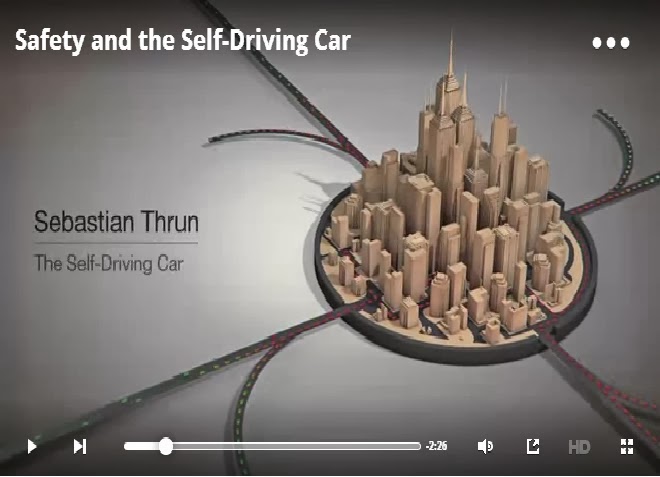
Similarly, Google is taking smart cars to the next level with their design of the self-driving car. If you live in the Silicon Valley, you have probably seen Google’s self-driving car in action. The video above is Google’s vision for the future of smart, self-driving cars. With the Internet of Everything (IoE) era among us, and the ability for devices to connect with each other, this vision of less congested, safer roads is not too far away. Automobile manufacturers are already incorporating smart machines in vehicles for things such as hands free GPS, and music. How will smart machines and Artificial Intelligence continue evolving along with self-driving cars?

Monday, February 24, 2014

Google, Microsoft, Facebook, and More are Validating the Artificial Intelligence Market


Here is a short clip from "What's the Big Deal?" talking about Google's plan to move toward Artificial Intelligence (A.I.). Google is not the only one interested in A.I., though. Big name companies including IBM, Apple, Microsoft, Nuance, and Facebook are also making an investment into A.I. business units. With this sudden spike of interest in A.I., the future is looking bright for intelligent super computers! 

What do you think about these major companies investing in A.I.? 

Thursday, January 30, 2014

Throwback Thursday: This is Your Website with FAQ's. This is the Website of the Future. Any Questions?

Happy Throwback Thursday!

The CEO of noHold, Diego Ventura, recently sent me a link to a website called Internet Archive: Wayback Machine. This website has millions of archived web pages from over the years. After checking out some of my favorite company’s older web designs, I thought about support pages. I found a few support pages from various tech companies and was surprised at how different they were designed compared to today.

Intel Support Page (1998)
Above is a screenshot of Intel’s support homepage from 1998. Their support for that time consisted of having a list of products to click on and then pops up some general facts and solutions to typical problems. There was also a “Did this help?” question at the bottom where end-users could provide feedback about their experience.

Apple Support Page (1998)
For all the iPhone lovers out there, here is a screenshot of Apple’s support page from 1998. One of Apple’s support resources was to utilize their searchable knowledgebase, which allowed end-users access to try and find solutions to their problems.

Lastly, I wanted to share Cisco’s support page from 1996. They approached their support page with more FAQ style tools.

Cisco is doing a lot of work with the Internet of Everything and futuristic concepts, so I thought it was interesting to take a look back and see how the visionaries were providing support for their customers 20 years ago.

You can definitely tell the times have changed and technology has advanced greatly. Companies are putting more emphasis on the customer experience today and rightfully so. Having anything but an excellent customer service/support strategy is just not going to cut it in today’s world. With smart machines booming in the market, consumers are demanding that interactive component. You can already tell that within the last 20 years, websites have become drastically more engaging and interactive. End-users have a conversation with a Virtual Agent to find the solution to their problem, creating a more person experience for the consumer, instead of going through a list of FAQ’s. 
Cisco Support Page (1996)

Is your website stuck in FAQ-mode? How much has your brand's support experience evolved in the past 10 years? Do you envision a future where support pages are immersive and completely interactive? 

Cheers!


Thursday, January 23, 2014

Throwback Thursday: Human-Like Artificial Intelligence

Happy Throwback Thursday!

In 2001, the movie A.I. Artificial Intelligence opened in theaters. It’s a movie exploring the concept of artificial intelligence with the ability to think and feel emotions. Since 2001, it seems like A.I. has become more of a norm than it was before.  Last week noHold shared the movie “Her” starring Joaquin Phoenix and Scarlett Johansson (the voice of the AI). I recently had the time (and free movie passes) to go enjoy it for myself. When you get past the initial amazement of a human falling in love with his Operating System, you begin to see that the movie challenges you to think outside the box and wonder “what if.” It also opens your eyes to how much of today’s world is already emotionally connected to technology.

These movies may seem fictional and completely out of the norm, but if you look at how much technology has advanced in such a short amount of time, it doesn't seem as far-fetched as we think. For example, Siri is one of the most popular functions of an iPhone, not only for the convenience, but for entertainment as well. I know people who talk to Siri when they are bored just to see what she says. In fact, one of our Virtual Agents was actually proposed to! Developers are beginning to see that consumers want to converse with Artificial Intelligence that has some sort of personality.

Leading analyst firms are already predicting the growth and success of smart machines. Soon, everyone will be engaging with smart technologies on a daily basis. The concept of emotions and smart machines is in its very early stages. One example is Intel’s demonstration of the Edison Chip at CES 2014. They showed an example of how the Edison chip can be used as a helping hand to parents, being able to check your child’s vitals or turning on the bottle warmer when it hears the baby cry. This device analyzes the situation and responds accordingly with somewhat of a mothers nurturing sense.

Seems like the next step is for A.I. is to mimic or get closer to human emotion…what do you think? Should Virtual Assistants have the capability to detect and respond with emotion? Some already do, but to what extent? 

www.nohold.com

Thursday, January 16, 2014

Throwback Thursday: Then and Now: The Consumer Electronics Show

The Consumer Electronics Show (CES) has been around since 1967. It is a time of the year where companies can show off what new innovations they have created and contributed to the market. Since the CES 2014 has officially come to an end as of January 9th, I thought it would be fun to take a look back at previous CES’s for this week’s Throwback Thursday.

I wanted to find some past Apple announcements from CES (maybe of the iPhone), but then I realized they have not attended a CES since 1992. In 1992, they announced the launch of Apple’s Newton; one of their first designs of a handheld computer (i.e. a tablet). Since then, Apple has not returned to any CES but instead has created their own conferences to announce new Apple products. A decision made due to cost effectiveness. Apple’s absence didn't seem to matter to CES because Apple is still able to dominate the show with companies designing Apple-related products. (E.g. docks, chargers, apps, etc.) (Apple Still Casts a Long Shadow Over CES)

After that, I wanted to go back in time a decade to check out what was trending in the 2004 Consumer Electronics Show. I found that pocket-sized, digital cameras were one of the top new gadgets being presented at CES 2004. It seems silly now since everyone’s phone has a camera with the same capabilities, but it makes me wonder, what will be big at CES 2024?

There was so much to see at CES, the electronics mentioned above are just scratching the surface as to what was there. I did find an article from Forbes Magazine by James McQuivey that sums up CES 2014 into three main points though: “1) Wearables will give birth to a second mainstream subcategory: smartwatches, 2) The TV business remains desperate, and 3) The digital home will finally mean something specific.”


Speaking of CES 2014, there were some really innovative creations this year such as Dell's Steam Machine, which made quite an impression. This machine takes gaming to a whole new level, allowing you to play PC games in any room you want. Another gadget that made headlines was D-Link’s revolutionized baby monitors. Contrary to tradition baby monitors, D-Link created WiFi baby cameras that connect to an app on your smartphone. With this new technology you can do more than just watch your babies every move from your phone, but you can also check the room temperature, sound, motion, and more with these cameras.

Wearable devices were all the rage at CES 2014 as well. From smartwatches to Google Glass, being able to wear your device is becoming more popular. It is estimated that one million wearable devices will be bought by the end of 2014 and 300 million by 2018 (From BYOD to WYOD: How Wearables will Transform Business). The Pebble Steel smartwatch was one of the favorites at CES 2014, but it certainly wasn't the only smartwatch that appeared in Vegas. This new trend is only increasing the number of devices connected to the Internet, meaning the Internet of Everything (IoE) is gaining popularity; also proven by Cisco’s main floor exhibit on the Internet of Everything.

Another main point at CES 2014 that votes in favor of the IoE is that the digital home will finally become a reality. Users will have the ability to control their physical surroundings with an application via their smartphones. Automation is the new big thing; soon everything on the market is going to be automated. And when this happens, these smart machines need to be able to communicate with one another to provide a seamless, more convenient way of living. For example, using one application to control all your smart devices.  

All in all, it seems as though the CES had another successful show year. Were you able to attend? Did you have a favorite gadget this year?

http://www.nohold.com 

Thursday, December 12, 2013

Throwback Thursday: Holiday Traditions

The smell of pine trees, the sound of sleigh bells all around, red and green decorations, and twinkling lights can only mean one thing... the holidays are here! The holiday season is a time of tradition no matter what you celebrate. Here at noHold we have a few holiday traditions of our own. Before the office closes for the holiday, all the employees gather around for a cup of hot chocolate and Pandoro (a traditional Italian sweet bread that is popular around the Christmas season). We participate in a small gift exchange game all while enjoying the holiday treats. 

eCommerce is no exception to holiday traditions! The traditional Cyber Monday, which occurs a few days after Black Friday, where you can find major savings online and avoid the holiday crowds. Another customer service holiday tradition is the "12 Days of Giveaways." This is a contest when different stores donate items to giveaway to lucky contestants! In fact, just this year Apple decided to join the tradition and bring the "12 Days of Gifts" to the United States. Apple will be giving away a free download for 12 days throughout the holiday season.  

With the abundance of holiday shoppers looking for those yearly discount, this is the busiest time of year for customer service and support representatives. A new holiday customer service tradition is the ability to ‘share’ purchases, support solutions, wish lists and more via social media. Today, Virtual Agents are capable of taking the load off of the contact center while increasing Customer Satisfaction. Check out the slideshare below as an example.


What are some of your holiday traditions?

Happy Throwback Thursday!